The moment you embark on the journey of choosing a name, especially one steeped in a culture as rich as Korea's, you're not just picking sounds. You're weaving threads of history, hope, and identity. It's truly The Art of Choosing a Korean Male Name With Deep Cultural Significance—a process far more profound than simply liking a sound. It's about understanding the delicate dance between tradition and modernity, the power of characters, and the aspirations embedded in every syllable.
At a Glance: Your Quick Guide to Korean Male Names
- Structure: Most Korean names are three syllables: one-syllable family name, followed by a two-syllable given name.
- Meaning is Key: Names are often derived from Hanja (Sino-Korean characters), each carrying specific, positive meanings. Pure Korean names (순우리말 이름) are also growing in popularity.
- Hanja's Power: A single pronunciation can have multiple Hanja spellings, each with a different meaning. Parents carefully choose the Hanja for its auspicious interpretation.
- Tradition vs. Trend: Some families follow generational syllable sharing (돌림자), though this is less common today. Others might consult for lucky names.
- Romanization Variation: While standard Romanization exists, personal preferences mean a name like "JaeHun" can have multiple Hangul spellings, making the original Korean script more precise.
- Gender Nuance: Traditionally, boy names evoke strength; modern choices include more gentle or even gender-neutral options.
The Foundation: Understanding Korean Name Structure
Imagine a name as a tiny story. In Korea, that story typically unfolds in a clear, three-part structure: your family name first, followed by your given name. So, you'll encounter Kim Ji-ho or Lee Min-jun, not Ji-ho Kim. This ordering isn't just a linguistic quirk; it’s a reflection of a culture that places family and ancestry at its core.
The family name, or seong (성), is almost always a single syllable. The most ubiquitous are 김 (Kim), 이 (Lee), and 박 (Park/Bak), which collectively account for nearly half of the Korean population. Other common ones include 정 (Jeong) and 윤 (Yoon/Yun). These aren't just identifiers; they carry historical weight, often tracing back to powerful clans and ancestral origins.
Your given name, or ireum (이름), typically consists of two syllables. While you might occasionally hear a single-syllable given name, the two-syllable format is overwhelmingly common and culturally expected. These two syllables aren't random sounds; they are carefully chosen to imbue the child with specific qualities, hopes, and destinies.
The Heart of the Name: Sino-Korean Hanja vs. Pure Korean Beauty
The profound meaning behind a Korean name often stems from its Hanja — the Chinese characters historically used in Korean. Each Hanja carries its own distinct meaning, and when two are combined for a given name, their meanings interweave to form a rich, layered significance. For instance, 'Ji-ho' could mean "wisdom and knowledge" or "tiger and fierce," depending on the specific Hanja chosen for 'Ji' and 'Ho.' Parents pour over these options, seeking the most auspicious and beautiful combination for their child.
This deep dive into Hanja offers parents incredible flexibility. A name might sound beautiful, but its true power lies in the characters behind it. This is why knowing the Hanja for a name is so crucial; it unlocks its full cultural and symbolic weight.
Beyond Hanja, a growing trend embraces pure Korean names (순우리말 이름), which are derived from native Korean vocabulary rather than Sino-Korean roots. These names often have a softer, more poetic feel, drawing inspiration from nature, virtues, or everyday beautiful words. Think of names like 'Haneul' (sky) or 'Bitgaram' (light river). They offer a distinct, modern charm, often chosen for their simple elegance and clear, direct meaning without the complexity of Hanja variations.
Deciphering Meanings: More Than Just Sounds
The beauty of a Korean given name lies not just in its sound but in the depth of its potential meanings. A single pronunciation, like 'Jimin,' might correspond to several different Hanja combinations. One set of Hanja might mean "wisdom and quickness," while another could convey "clever and gentle." This allows parents to choose a name that perfectly aligns with their hopes and dreams for their child, selecting the Hanja that paints the most positive and desirable picture.
This nuance is what makes choosing a Korean name an art. It’s not enough to simply like how a name rolls off the tongue; you must also connect with its underlying essence. Understanding this interplay is vital when you consider a name, whether it's for a child, a fictional character, or even just out of curiosity to learn more about a friend's name.
A Nod to Tradition: Generational Names and Auspicious Choices
Korean naming traditions are rich with practices that connect individuals to their lineage. One of the most prominent is the use of dolimja (돌림자), or generational names. It’s a common practice for siblings or cousins within a family to share one syllable in their given names. This shared syllable acts as an audible marker, instantly identifying their generation and family line. For example, all boys in one generation might have 'Min' as their first syllable (Min-jun, Min-ho), while the next generation shares 'Ji' (Ji-ho, Ji-min). While this tradition is less strictly observed in modern urban families, it remains a beautiful testament to the enduring value of family ties and continuity.
Beyond familial patterns, some families traditionally consult experts, from shamans to fortune tellers, to ensure a name aligns auspiciously with a child's birth date, time, and even the stroke count of its Hanja characters. This practice, while less universal today, underscores a deeply rooted belief in the power of a name to influence one's destiny and well-being. It reflects a desire to set a child on the most fortunate path possible, a sentiment that resonates universally, regardless of cultural specifics.
Navigating Gender: Modern Twists on Classic Masculinity
Traditionally, Korean boy names have leaned towards meanings that evoke strength, bravery, leadership, and a resolute character. Names like 'Chul' (iron) or 'Hyuk' (radiant) embody these classic masculine ideals, aiming to instill qualities of resilience and prominence. The Hanja chosen for boy names often reflect these powerful virtues, aligning with societal expectations for male roles.
However, modern Korean naming has seen a fascinating evolution. While strong names remain popular, there's a growing appreciation for boy names with softer, more gentle meanings. You'll also find an increasing number of gender-neutral names, offering parents more flexibility and reflecting a broader shift in cultural perspectives. Names like 'Tae' (태), meaning "great" or "magnificent," are often found in boy names but are fundamentally gender-neutral in syllable. This blend of tradition and modernity means that while the core value of an auspicious name persists, the definition of what constitutes an ideal name for a boy is expanding.
The Sound & The Spell: Pronunciation and Romanization Pitfalls
At its heart, the Korean language is written in Hangul, a phonetic alphabet known for its logical structure and ease of learning. With 24 basic and 27 complex letters, Hangul provides a precise way to pronounce any Korean word, including names. Mastering Hangul is truly the most accurate way to understand and say a Korean name correctly.
However, when Korean names cross into English, they often undergo a process called Romanization—converting Korean script into the Latin alphabet. While the Revised Romanization of Korean offers a standard, personal preferences and older systems often lead to variations. For example, a name pronounced 'Jae-hun' could be written as JaeHun, Jae-hoon, Jae-heon, or even Jayhoon. This creates a fascinating challenge: a single Romanized spelling might correspond to different Hangul spellings, each with a unique set of Hanja and thus, different meanings.
This is where a little caution goes a long way. When researching names, remember that the Romanized version is merely an approximation. To truly grasp the name's identity, always seek out its Hangul spelling. This precision ensures you're connecting with the exact meaning and cultural intent behind the name, preventing any unintentional misinterpretations.
A Curated Gallery: Inspiring Korean Male Names and Their Stories
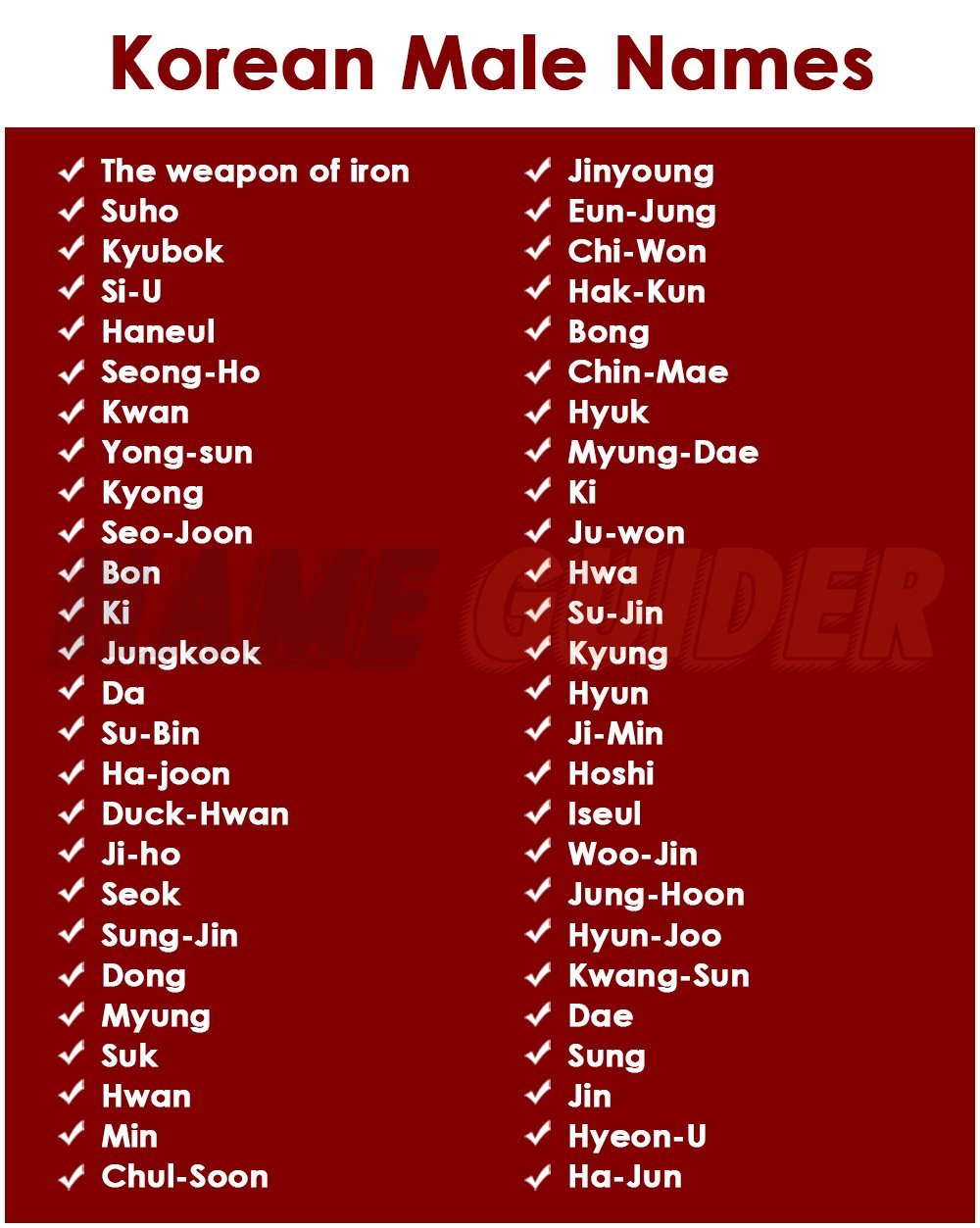
Choosing a name is a deeply personal process, but exploring popular and meaningful options can spark inspiration. Here’s a journey through some beloved and significant Korean male names, categorized by their distinct vibes and popular appeal.
Popular Picks: Names You'll Hear
These are the names resonating with parents today, often blending pleasant sounds with auspicious Hanja meanings.
- Do-yun (도윤): A beautiful combination, often signifying "path, road, way" + "allow, consent," suggesting a life of guided purpose.
- Eun-woo (은우): Evokes warmth, with "kindness, mercy, charity" + "house, universe, help, protect, bless."
- Ha-joon (하준): A bright and strong choice, combining "summer" + "talented, handsome."
- Ji-ho (지호): Versatile and strong, meaning "wisdom, knowledge, intelligence" or "tiger, brave, fierce" depending on Hanja.
- Min-jun (민준): A name of swift intelligence and talent: "quick, clever, sharp" or "gentle, affable" + "talented, handsome."
- Seo-jun (서준): Often suggests good fortune and talent: "felicitous, omen, auspicious" or "to open up, unfold" + "talented, handsome."
- Jimin (지민): A blend of "wisdom and quickness" or "clever and gentle."
- Minho (민호): A powerful combination meaning "clever and great" or "bright and heroic."
- Taeyang (태양): A pure Korean name meaning "sun," radiating warmth and vitality.
Beyond the Familiar: Unique & Rare Choices
For those seeking something distinctive, these names offer a touch of individuality, often with profound or evocative meanings.
- Beom Seok (범석): A sturdy choice, translating to "pattern of a rock" ("model or pattern" + "rock, stone").
- Bong (봉): A powerful, singular name derived from the mythical phoenix.
- Dong (동): Simple yet profound, meaning "east," often symbolizing the rising sun and new beginnings.
- Bitgaram (빛가람): A beautiful pure Korean name meaning "light river."
- Chul (철): A strong, classic choice meaning "iron" or "firm," symbolizing resilience.
- Duri (두리): A pure Korean name, used in the Gyeongsang dialect, meaning "two."
Charms & Grins: Cute Korean Boy Names
Sometimes, a name just needs to bring a smile. These names often have softer sounds or meanings associated with tenderness.
- Baek Hyeon (백현): While meaning "older brother" + "worthy and virtuous," it has a sweet, gentle sound.
- Chung Ae (청애): A lovely combination of "noble and love," evoking gentle affection.
- So (소): A wonderfully simple name that means "smile."
- Ryung (령): Conveys "brightness" or "light," giving it a soft, appealing glow.
- Ji-hu (지후): A popular cute name meaning "wisdom and protection," offering both depth and tenderness.
Effortlessly Cool: Names with Edge
For a modern, stylish feel, these names carry a certain gravitas or sleekness.
- Chin-Hae (진해): Meaning "truth" or "depth of the ocean," it’s a name that hints at profound coolness.
- Hoon (훈): A strong, crisp name signifying "teaching" or "merit."
- Hyuk (혁): A truly "radiant" name, sounding sharp and impactful.
- Yong-sun (용선): Evokes power with elegance, meaning "the dragon in the first position."
Strength & Substance: Powerful Korean Names
These names carry inherent strength, often derived from nature, leadership, or enduring qualities.
- Chul (철): As mentioned, "firm" or "iron," embodying unbreakable resolve.
- Dae (대): A grand name, signifying "the great one" or "shining."
- Haneul (하늘): A pure Korean name meaning "heaven, sky," evoking vastness and aspiration.
- Jum (검): A regal name meaning "king, ruler."
- Man-Young (만영): A wish for enduring prosperity, meaning "ten thousand years of prosperity."
Elegance in Sound: Beautiful Korean Boy Names
These names are chosen for their melodic quality and the aesthetically pleasing imagery their Hanja evoke.
- Byeong-Ho (병호): A harmonious name meaning "bright, luminous, glorious" + "great, vast" or "summer, heaven."
- Bon-Hwa (본화): Meaning "one who is glorious," it’s a name that shines.
- Dong-Yul (동율): Combines the vitality of the "east" (rising sun) with "having passion."
- In (인): A foundational virtue, meaning "humanity or wise."
From the Stage to Your Home: K-Pop Inspired Names
The global phenomenon of K-Pop has introduced many to beautiful Korean names. While some are stage names, others are deeply meaningful birth names.
- Baekhyun (EXO): His birth name means "older brother" and "virtuous, worthy."
- Jin (BTS): From the full name Seok-Jin, meaning "precious, rare."
- Jungkook (BTS): A gentle yet strong name, often meaning "quiet, still, gentle."
- Suho (EXO): A stage name meaning "guardian," fitting for a leader.
Your Path Forward: Actionable Steps to Choose a Name
Choosing a name is a big decision, and with Korean names, the layers of meaning add an extra dimension. Here’s a practical guide to navigate the process with confidence:
1. Consider the Resonance
Start with what feels right. Does a name evoke a particular feeling or image? Think about the values, traits, or hopes you want this name to carry. Do you wish for your child to be wise, brave, kind, or radiant? Let these aspirations guide your initial choices.
2. Hanja Deep Dive
If you're leaning towards a Sino-Korean name, this step is crucial. Don't just pick a sound; research the specific Hanja combinations for that pronunciation. Remember, 'Ji-ho' could mean vastly different things depending on the characters. Utilize resources that show common Hanja pairings and their interpretations. This is where you truly unlock the name's profound significance.
3. The Sound Test
Say the name aloud. Many times. How does it feel to say? How does it sound with your family name? Does it flow naturally, or does it feel awkward? Test it in different contexts – as a formal introduction, a playful call, or even when you're slightly annoyed! This practical step helps you gauge its real-world usability.
4. Modern vs. Traditional Vibe
Decide if you prefer a classic, Hanja-based name with deep historical roots or a pure Korean name (순우리말 이름) that feels more modern, poetic, and directly connected to native Korean vocabulary. Both are beautiful choices, but they carry different aesthetics and cultural weight.
5. Family Legacy
Inquire about any dolimja (generational name) traditions in the family. While less common, respecting these traditions can be a meaningful way to honor your heritage and connect your child to their lineage. Even if you choose not to follow it, being aware is valuable.
6. Consulting Wisdom
If you have Korean friends, family, or mentors, share your top choices with them. They can offer invaluable cultural insights, spot potential unintended meanings, or simply affirm your choices from a native perspective. This step can prevent cultural missteps and provide peace of mind.
7. The Romanization Riddle
Once you have a Hangul name you love, decide on its Romanized spelling. While standard Revised Romanization exists, personal preferences are common. Consider how it will look and sound in English-speaking contexts and how easy it will be for others to pronounce. Be prepared that some variations might exist regardless.
8. Future-Proofing
Think about the child growing up with this name. Will it suit them as a baby, a teenager, and an adult? Does it feel timeless? While you can't predict everything, aiming for a name with broad appeal and lasting dignity is a smart move. You can even consider a Korean male name generator to explore many options quickly.
Addressing Common Questions: Your FAQs Answered
We’ve covered a lot, but some questions pop up frequently when exploring Korean names. Let's tackle them directly.
What is the rarest Korean name for a boy?
While "rarest" is hard to quantify definitively as trends shift, pure Korean names are generally less common than Hanja names. A beautiful example of a pure Korean name, though often used for girls, is 다솜 (Dasom), meaning "love." For boys, unique Hanja combinations or very modern pure Korean choices would be rare.
What are the most popular Korean boy names right now (2024–2025)?
Current trends show names like 이준 (Yi-jun), 하준 (Ha-jun), and 도윤 (Do-yun) topping the lists for boys. These names are often chosen for their pleasant sound and auspicious Hanja meanings.
What is a cute Korean boy name?
Many names can sound cute! 지후 (Ji-hu) is a popular choice, often meaning "wisdom and protection," which has a tender quality. Names with soft sounds like So (소 - smile) or those with gentle meanings are often considered cute.
Are there royal Korean surnames?
Yes, historically, certain surnames were associated with royal clans. The 전주 이씨 (Jeonju Yi clan) was the royal family of the Joseon Dynasty, and the 김해 김씨 (Gimhae Kim clan) and 밀양 박씨 (Miryang Park clan) were also powerful royal clans from earlier kingdoms.
Is 'Tae' (태) a gender-neutral syllable?
Yes, 태 (Tae) is considered a gender-neutral syllable. While it appears more frequently in boy names (like Taeyang, Tae-joon), it can also be found in girl names. It often means "great," "magnificent," or "peaceful."
What are the Korean words for 'butterfly' and 'moon'?
The pure Korean word for butterfly is 나비 (Nabi). For moon, the pure Korean word is 달 (Dal), while 월 (Wol) is the Sino-Korean (Hanja) equivalent. These are beautiful examples of pure Korean vocabulary.
What is the full Korean name structure?
The standard full Korean name structure is Family Name (성) followed by Given Name (이름). For example, 김지수 (Kim Ji-su), where Kim is the family name and Ji-su is the given name.
What does 'Yuri' mean as a name?
유리 (Yuri) can have different meanings depending on the Hanja. It commonly means "glass, crystal" (琉璃) or can also mean "flowing beauty" or "gentle jasmine" (柔莉). While more often a girl's name, Hanja flexibility means it could theoretically be adapted.
What does 'Minho' mean?
민호 (Min-ho) is a popular boy's name that typically means "clever and brave" or "bright and heroic," combining Hanja for quickness/cleverness with bravery/greatness.
Is 'Kai' a traditional Korean name?
'Kai' is not a traditional Korean name. While it sounds pleasant and is used by K-Pop idols (often as a stage name, like EXO's Kai), it's not rooted in traditional Korean Hanja or pure Korean vocabulary as a given name.
The Journey of Naming: A Lasting Legacy
Choosing a Korean male name is a privilege and a profound act of love. It’s an opportunity to bestow not just a label, but a legacy—a wish, a value, a piece of cultural identity. Whether you opt for the deep resonance of Hanja, the poetic simplicity of a pure Korean name, or a blend of both, remember that this name will walk through life with its bearer, echoing the thoughtfulness and care you’ve put into its selection. Embrace the process, delight in the discovery, and know that you are participating in a timeless art that connects generations.